How to Build the Right Mindset in the NFT Space

pasted image 0

A digital landscape that is much similar to the wild west, venturing in the NFT space sure has its ups and downs. But doesn’t every new space come with new challenges?

Where there are countless new opportunities, there are countless possibilities of going through challenges that you’ve never faced before. And, how can one ignore the possibility of being scammed. 

But, let’s get into how you can build the right mindset in the space after you’ve got a thorough idea of what NFTs are. 

What’s an NFT? 
pasted image 0 (1)

Before getting into the dictionary definition of what an NFT is, I’d like to explain what NFTs are through an analogy. 

So, take a $10 bill and try exchanging it with someone else for another $10 bill. Now, after exchanging the $10 bill, ask yourself, was there any difference in value of both these bills? No, there isn’t! They’re the same in value, no matter how many times you exchange it with other people. 

What I just explained in the para above is the concept of fungibility. 

So, now let’s get down to breaking the term NFT down into bits for better understandability. The term NFT is an abbreviation for “non-fungible token”.

Now, the literal meaning of fungible is replaceable with another identical item, which makes non-fungible that’s something irreplaceable with identical items.

In simple words, a non-fungible item can be something that is unique and cannot be replaceable with any item that may be identical. 

Now, what’s left in the term is token? See, a token is a blockchain based way of representing a unique digital or even physical asset (for example: a piece of digital or physical art) by giving certificate of ownership.

So, a non-fungible token (NFT) can be defined as a unique digital/physical asset that can be owned by a person on the blockchain.       

Defining the NFT Space 

Now, let’s get down to what NFT space is, the space that everyone’s been talking about lately. 

To put it simply, anything/everything and everyone that has anything to do with NFTs makes up the so called NFT space. 

It isn’t really a tangible space but an imaginary one, where a group of people, across the world, are bound together by their love and interest in NFTs.

From creating NFTs to collecting them and trading them, everything that’s happening comes under the umbrella of this space.   

Growth of NFTs in the world 

In 2009, the world was somewhat taken by surprise by the blockchain technology. No one thought that something like this would come forward.

Yes, the first use case was a currency, Bitcoin, but it opened the door towards endless new possibilities that this technology could lead to.  

The concept of representing ownership of assets on blockchain existed way before the first NFT ever came out. In fact, the idea was present even before the creation of Ethereum. 

This concept made its way with the name of colored coins, which was introduced by Meni Rosenfield in a paper released in 2012

In 2013, the idea of Ethereum was conceived and soon after the work started on developing the Ethereum chain. By July 2015, Ethereum blockchain went live. 

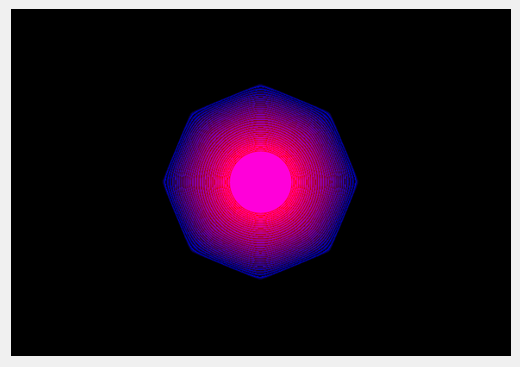
Now, most of the world knows Ethereum as not only a currency but also a major blockchain for NFTs as well. However, the first ever NFT to be minted was known as “Quantum” by Kevin McCoy, a digital artist, on Namecoin Blockchain.
quantum

With time, what started as an industry that was purely based on passion, the NFT space grew leaps and bound. After 2017 NFT gaming and many metaverse projects also started coming forward, which boosted the space even further. 

2021 is considered as the first year in the NFT space due the explosive surge in both the demand and supply of NFTs. Where the total sales volume was around $95 million in 2020, it boosted up to a staggering number of $25 billion in 2021.     

Reasons for the Rise in Demand for NFTs 

The recent rise in the total sales volume of NFTs clearly shows a massive increase in its demand globally. 

But, why is it so? Why has the demand for NFTs risen so much? 

Understanding this may also help in understanding the mindset of many people in the overall space. 

The massive rise in the demand for NFTs can be due to a variety of factors. Let’s first look at this scenario as how it appears to be. Apparently, the global demand for digital collectibles and art has risen considerably, which has made quite an impact on the overall demand for NFTs as well. Other factors may also include the rising popularity of blockchain based games.  

Over the years, it has been observed that people have acquired a taste for not only digital art but also for digital items and/or characters that can be used in blockchain based games as well. 

However, these are not the only reasons for the rising demand for NFTs. Here are some other factors that contribute largely to the increasing demand for NFTs:

  • Acceptance and trade of cryptocurrencies.
  • NFTs make it possible to trace the original owners quite easily.
  • The ownership records of NFTs cannot be changed, deleted or copied.
  • NFT ownership isn’t only traceable easily but doesn’t require any third-party verification either.
  • NFTs can be divided in smaller quantities/denominations just like cryptocurrencies.  

How to Develop the Right Mindset in the NFT Space 

develop

While the NFT space is growing exponentially, it can still be considered in its early phase. There are many things happening in the space that are questionable. 

From rug pulls to an NFT being sold for millions of dollars, what drives the value of NFTs and how can a person, who doesn’t know anything about this space gain benefits from it?

Well, it all comes down to having the right mindset. 

The Right Mindset for Collectors & Traders 

The NFT space is new and nobody knows everything about it. Even the leaders in the NFT space are still learning about it by experimenting for innovation. 

While high monetary returns/benefits may sound quite alluring for freshers, there is a predominant requirement of being open to learn at all times, which is the foundation of building the right mindset in the NFT space.

Here are a few tips that can help newbies in space to build the right mindset. 

The Need for Constant Skill Development 

While, the comprehension of the NFT basics is a fundamental requirement for understanding NFTs but unfortunately it’s not enough for building a career in the space. 

Keeping an eye on market statistics can also only help you so much, ultimately a person needs to discover all the courses and study material online and chug them down. Learning as much as possible about blockchain and NFTs is the only way forward in this space.

Moreover, since the NFT space is new and finding authentic courses and study material is difficult, gelling in the NFT communities on Discord and following the space leaders on Twitter is extremely important. 

DYOR (Do Your OWN Research)

Almost over 80% of the NFT space consists of collectors and traders, who are just in it for the monetary benefits. 

Now, there’s nothing wrong in minting NFTs with the intent of collecting and/or trading for a profit. However, where most collectors and traders make a mistake is not to research a project or collection thoroughly. 

Every seasoned collector or trader will always research each aspect of the project or collection being launched. From the team behind the project or collection to its future planning, artwork and overall roadmap, each aspect of the project/collection carries considerable weightage when making a decision to mint or not?!

Say No to FOMO (Fear of Missing Out)

Most collectors and traders tend to lose sight of their goals by giving into FOMO. Being in the NFT space as a collector and/or trader, you must realize that there will always be more legit projects and collections, backed by authentic teams and VCs, for you to mint. 

So, patience and keen analytical skills are the key components to becoming a successful collector/trader in the NFT space. In addition, this also decreases your chances of loss as FOMO increases the possibility of you investing into rug pull projects.    

The Right Mindset for Creators 

It won’t be absolutely false to say that most creators in the space aren’t experimenting for innovation. See, initially the creators in the space were experimenting and exploring to come up with something innovative. 

However, with the success of collections such as cryptopunnks and BAYC (bored ape yacht club), most creators started to mimic the same style. 

For two to three years, thousands of PFP based collections copying the successful collections were seen to emerge in the space. And to everyone’s surprise most of these collections were even somewhat successful. 

But, why were most of these copycats successful? Doesn’t make sense, does it now? 

See, most creators were cleverly using collector’s and trader’s FOMO to sell out their own collections and projects. 

Now, it’s not as if good projects, which were bringing innovation and creativity to the space weren’t there at all, they were emerging in the space too however, not in the quantities as the mimicked projects. 

So, based on the behavior of creators in the space so far, here are some tips that can help in building the right mindset for creators.  

Be in it for Sheer Passion

If you’re a creator then the first and most important thing for you to grow and be successful in this space is to be passionate about creating something new in the NFT space. 

See, there have been countless creators and rug pullers, who have been in the space just for the short term and only looking at monetary benefits. 

However, if you’re a creator then the driving force behind your work should be your passion to create rather than monetary benefits alone.

Being a creator just for the sheer passion of creating NFTs will help you bring originality to the space, not to mention it’ll also help you bring innovation to the space.   

Be Open to Change

Being a creator, you must be open to the idea of failure. Free yourself from fear of failure because when you’re looking to create something new, unknown challenges will make their way towards you. 

You should constantly persevere to evolve with the space and understand the dynamic needs of the future space. For this, you must be open to change because a rigid and fixed mindset means death in this fast paced and ever-evolving NFT space.

Bring Something New to the Space 

It’s extremely important for you, as a creator, to work on something that the space hasn’t seen before. While, creating innovative projects will require a lot of work, creativity & experimentation but this is the only way that you can bring an original idea into the space.

Inducing FOMO and simply selling out your project or collection should not be your end goal. In fact, you must look to the future, create a solid roadmap for your projects, which will help keep your audience interested in the long run.   

Wrap up 

Whether you’re a creator or a collector/trader, success in the NFT space is dependent on the right mindset because that’s the only thing standing between you and your growth. Understanding how the space works, facing challenges head on, learning from mistakes, setting long-term goals and completely immersing yourself in the craft is the only way to move forward.

VC’s Rapidly Growing Interest in Web3 – But Why?

You know you’re investing in the right industry when you see world’s biggest players making substantial moves in it. 

Numbers never lie and the amount of cash various venture capitalists are pouring into web 3 are over the roof. Reports show that venture capitalist firms had poured in around $33 billion in various blockchain and crypto startups in 2021. 

Expert forecasts show that these investment figures are highly likely to have a 100% increase by the end of 2022. 

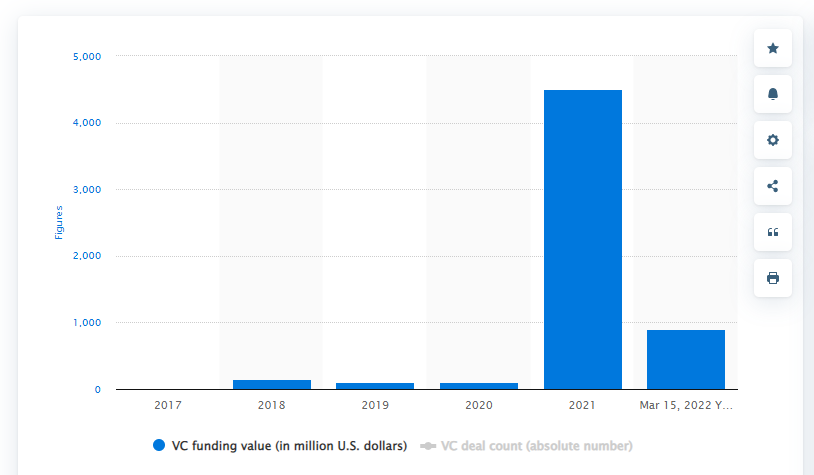
Just the global VC funding in the NFT startups in 2021 crossed over a staggering $4.5 billion.

graph

(Source: Statista)

That said, makes me curious about why these players are pouring too much into this new space. And, after substantial research, I’ve come to a conclusion that there are 5 reasons for the increasing interest of venture capitalists in the web3 space.

Massive ROIs  

roi

Data shows that investing in web3 space has proven to be more lucrative for investors. In 2021, the market cap was seen to have increased as much as 200%. 

Bitcoin was offering a staggering return of 400%, whereas ETH stayed close to 60% returns. Various crypto currencies have been observed to be offering mind blowing returns such as Solana, that went up to around 11000%.

NFTs also share the same explosive growth as the crypto space. With a massive year on year growth of 21000% in 2021 made the market go up to an estimated $40 Billion. Experts are now valuing the NFT market and traditional art market at the same level. 

Early movers in certain successful NFT projects, such as Bored Ape Yacht Club, CryptoPunks, Azuki and Doodles, have even enjoyed returns more than 10 times of their initial mint prices within a year.   

Exploring other sectors other than crypto currencies and NFTs, the DeFi sector has also shown exponential growth over the past two years. Admittedly, as of right now, the market cap is around $44 Billion however, back in 2020 this market was at around $20 Billion. 

Within this two-year time frame, the market has been observed to go as high as $160 Billion (in 2021). Experts say that this sector, which is currently quite a low percentage as compared to the traditional finance market, may even grow as much as 100 times by the end of 2027.  

One should keep in mind that there are always many in this space (similarly to new spaces that came before web 3), who’ve lost a substantial amount of their hard-earned money as well. However, when talking about venture capitalists, they tend to spread their investments in various projects, hedge their investments to minimize their losses and expect no more than a 30% return in a year. So, technically this is quite an opportunity for venture capitalists today to enjoy exponential growth, provided they play their cards right.  

Easy Liquidity 

pasted image 0 (3)

Normally in traditional financing, when a VC firm invests in a company, their investments are not likely to be easily liquidated. Venture Capitalists, after investing heavily in a business, will have to wait till the initial public offering (IPO), where they can offer their shares to the general public for sale. 

Now, the process of a private company switching to a public company is a challenging one, not to mention quite time consuming as well. Therefore, in most cases, the venture capitalists need to have a certain level of holding power. Needless to say, traditional financing is not likely to be easily liquidated.

However, when you invest in web3 startups such as NFT projects, they can easily enter or exit the market without having to go through complex procedures and at a moment’s notice.  

Moreover, investing in web3 means more transparency because all the data is stored on the blockchain, which can be accessed by the public at anytime from anywhere. 

Passive Income Generation 

passive

With investment in web3 not only there is a high likelihood of capital gains but in fact, an increasing trend of investing in web3 by venture capitalists is also due to this space’s capability of becoming an amazing source of passive income. 

Now, there are a number of ways through which venture capitalists can generate a sizeable stream of passive income from the web3 space. 

One of the most well-known ways of generating passive income in this space is by staking your NFTs, which allows you to gain rewards in the form of tokens, that can be later exchanged for fiat currency.

Another way to generate passive income is through yield farming. The way it works is that you first stake your NFTs on the blockchain network. Against these stakes, you are rewarded with tokens, which can be both traded in return for fiat currency as well as re-staked for earning further rewards. 

Moreover, you can also create a pool, where you can merge your tokens with fiat currency, which results in rewards as well. 

Confusing right? 

Well, to put it simply, by creating a pool, you are offering an exchange service (exchanging tokens for fiat currencies) to everyone else on the blockchain network. 

Now, the rewards, in most cases, are quite tempting. 

Firstly, the rewards are distributed on a daily basis rather than annually (in case of receiving dividends). And secondly, the rewards can range from a 2% return to even 1000% return, depending on the level of risk of the project you’re investing in. 

Thus, venture capitalists have the opportunity to generate highly lucrative streams of passive income before they liquidate their investments. This motivates them to keep holding their tokens or commit to the project until it’s successful.  

Highly Capital Efficient 

capital

Innovations in technology have helped companies gain higher revenues/profits with minimum investments. We have examples for this happening in every era. Whenever a revolutionizing technology comes forward, the businesses investing in the new space tend to get higher returns against their capital or the resources spent. 

One of the best ways to understand this is to look at Netflix. Here we have a company, that achieves way more with only a couple of thousand employees and is valued at over $100 billion in 2022. Whereas, if you look at its counterpart Blockbuster, a company that followed a brick-and-mortar business model, is only achieving a fraction of what Netflix is achieving. Even though Blockbuster employs more than 50000 employees but the best valuation it got was $5 billion. 

Same is the case when you compare businesses operating in web2 against companies or entrepreneurs operating in web3. You can see a massive decline in customer acquisition costs and marketing expenses in web3. 

The difference here is about the people in the space. People operating in web3 are passionate and genuinely love what they do. Moreover, someone who loves what they do and is blended tightly in a community is highly likely to influence others with word of mouth. 

Whereas most businesses in web2 are spending millions in marketing and sales just to acquire customers. With such expenses, a company operating in web2 requires larger amounts of seed money. Whereas, an entrepreneur operating in web3 can easily bootstrap through the rewards and passive income they are generating from their tokens. However, it’s only possible if the entrepreneur is playing his cards right, in the sense that it is only possible if the community is standing behind the project. 

That said, investing in web3 carries great risk too however, the rewards are likely to be much higher than as compared to what you can receive in web2, resulting in venture capitalists rising interests in pouring money into the new space.   

Lowest Point on the S-Curve

graph

Web3 is a new and unexplored territory. Undoubtedly, these are exciting times however, this is also a time where one has to be cautious. 

Experts view web3 to have exponential year on year growth over the next decade to make this space a trillion-dollar industry. 

Even with all the criticism and skepticism web3 is facing, giants like JPMorgan and a few others are known to invest in research divisions to learn more about web3. Needless to say, these big players understand that this space is still in its early days and want to capitalize as much as they can on this opportunity. 

Being early movers in this rapidly growing industry can prove to be an opportunity that simply cannot be missed, as the industry is still in its infancy. 

Wrapping up

I’ve been rambling on and on for quite some time now and I’m sure you want this to end. So, I’ll end this on this note: If you’re planning to get in on the web3 action (which is the right thing to do, considering that fortune always favors the bold) then you must tread carefully because you’re walking in an unexplored territory. Do your research, stay up-to-date and work on blending in the web3 community and things just might work in your favor.   

Significance of Web3 – Why Everyone’s Talking about it in 2023 

web3

Intro 

While it’s not exactly a completely new concept, web3 has exploded on a global scale since last year (2021). It has become quite the buzz word. Since metaverse took the stage, everyone’s sights have been fixed on web3. What it is, what it can do, what’s its significance and how is it a step forward?

So, to understand what web3 is, it’s better to understand the different stages of evolution that the internet went through. 

Evolution of the World Wide Web  

evolution

The internet we know of today wasn’t exactly like this all along. The technologies it’s based on have evolved overtime resulting in the version of the World Wide Web that we see and use today.

Web 1.0 

Initially, it all started with web1, which was roughly around the year 1990 to 2005. 

Now, this version was called web1 because it had certain characteristics that made it different from the evolved version known as web2. Some of these characteristics are follows:

  • Web1 was built on static pages that were linked to a system through hyperlinks.
  • It was based on HTML 3.2 such as tables and/or frames.
  • HTML forms were sent via email
  • All the content came from a server’s filesystem.

To put it simply, web1 is the first form of internet the world ever knew. And, in layman terms, it was designed in a manner that helped people have access to information. Nowadays, web1 is also known as “read-only web” because this version of the internet lacked user interaction, exchange of media and this version of the web was mainly concerned with helping users search for data/information. 

Let’s understand web1 through an analogy. Before the internet, people used phone directories to find out other people’s phone numbers. Now, if you make the complete directory digital and put it up online that’s accessible for everyone without people having the power to react to it then that’s web1. 

Web 2.0  

The form of web we know of today, where we can freely interact with each other, contribute different types of content and react to user-generated content, that’s web2.

Web2 has proven itself in community building, collaborations and online interaction for users, making it the primary social interaction today. As web1 was known as the “read-only web”, similarly you can easily call web2 as the “participative social web”. 

In essence web2 is a step forward from web1 and incorporates a much more sophisticated technology as compared to its predecessor.

Here are some characteristics that can make it easier for you to determine what web2 is like:

  • Free access to information
  • It uses Application Programming Interfaces (API)
  • Offers various forms of content based on user feedback
  • Allows interaction via
    • Social media
    • Blogging 
    • Social Networking
    • Tagging 
    • Podcasting

Over the years, access to mobile internet has allowed web2 to grow exponentially. There has been a considerable rise in social media usage and content consumption, allowing the app culture to dominate the online world. 

The easiest way of understanding web2 is to realize that even while reading this blog, you’re using web2.

Web 3.0  

Web3 is normally called the “read, write and execute web”. The world is now slowly transitioning itself into web3. 

Now, most of the space known as web3 is still unexplored. The current use cases of web3 are simply the beginning and there’s a long way to go to realize its full potential. 

But what is it? How can one define web3?

Different experts define web3 differently. Time Berners-Lee, the creator of the World Wide Web, while skeptic about the use of blockchain technology for web3, defined web3 as a “Semantic Web and envisioned an intelligent, autonomous, and open Internet that used artificial Intelligence and machine Learning to act as a “global brain” and process content conceptually and contextually.”

 Sheila Warren, CEO at Crypto Council for Innovation, defined web3 as a decentralized online ecosystem. “Web3 is a pure reform of online engagement”.

Patrick White, CEO at Bitwave said “Take the best engineers in the world and give them an API for money that never existed before, they’ll build things you never imagined, from payment networks to decentralized finance (DeFi). This will disintermediate traditional financial services companies in lending, trading and borrowing.” In essence he thinks of web3 as programmability of money. 

However, the question is about web3’s significance. How is web3 significant?

Significance of Web3  

It is the features of Web3 that make it significant. Following are the reasons why web3 matters:

Decentralized: 

decentralized

In the past, web2 relied heavily on a few big players, who had control and authority of the web. However, web3 has made the internet a decentralized space, where there are no single/few authority figures. 

Instead, the entire network is distributed into different nodes, where each node is responsible for storing data. This allows the control and authority to also be distributed amongst users along with making the entire network more resilient towards external attacks. 

An example of control can be taken from a certain incident that recently took place on Onlyfans. Onlyfans started in 2016 and it was supposedly a platform for influencers/content creators, where they could stream live and upload content for their subscribers/followers/fans. 

Now, in Aug 2021, Onlyfans decided to ban sexually explicit content on their platform. 

However, most of the content creators relied heavily on creating sexually explicit content therefore, didn’t approve of this ban. According to the content creators, Onlyfans was able to attract their high traffic volume due to their hard work. 

The backlash from the content creators was intense and even though the platform finally gave in and lifted the ban, this clearly shows that web2 accumulates control and authority to a few people.  

Secure

secure

Web3 is mainly based on Blockchain, which is a new technology. Initially it was created to support Bitcoin but the world soon realized that Blockchain had many other uses as well.

Now, in order to understand Blockchain security & safety, you first need to understand Blockchain itself and how it works. 

In a nutshell, Blockchain technology can be explained as a database that stores transaction data in the form of blocks. Each block is linked to the next block and can be used to verify transactions. 

This record of data is distributed across many computers’ worldwide therefore, these records cannot be altered because changing data on one block means that the data on all the blocks that come after it in the chain will also need to be changed. Moreover, if the data on a certain block needs to be changed, it can only be changed through a unanimous consensus of all the validators/miners on the chain. 

So, altering blocks is impossible and this helps in protection against external attacks, fraud, unwanted alterations and other forms of cybercrime.  

Ownership 

ownership

Web3 allows you to have ownership of digital assets. This is something that has never been seen before. You can directly own a digital asset through an NFT (non-fungible token). 

For example, suppose you’re playing a game in web2 and you’ve bought certain in-game items, all the items you purchase in-game will be linked to your game account. Now, this account is purely controlled by the game creator and in the event of account deletion by game creators, you will lose your in-game items.

Furthermore, if you choose to stop playing this game then these items will have no further value for you either so yes, your money goes down the drain. 

However, with web3, when you get the ownership of an in-game item through an NFT, that item isn’t just linked to your game account but in fact, it is also stored in your wallet. 

In the event of account deletion or you stopping to play, the item will still be in your ownership. Not even the game creators can revert your ownership of the said item. You can choose to keep the item or trade it in open markets and even make a profit on it as well just like any other asset you own in real life.  

Native Payments 

payments

Web2 payment methods purely rely on trusted third parties such as banks or other payment gateways integrated in platforms such as PayPal, which are again linked to your bank accounts. So, one way or the other, a user is bound to go through the banking channels.

Moreover, this also poses a problem for many users, who may not be living in certain regions. For example, PayPal doesn’t operate in Afghanistan, Pakistan, Ivory Coast and many others. 

With web3 such problems do not exist because web3 relies on tokens such as Eth to send money straight into a browser. No trusted third parties are required in web3 and users can easily send and receive tokens from any part of the world. 

Identity 

identity

In web3, you carry your identity everywhere you go. By this, it means that you don’t have to rely on any platform’s account like you used to in web2.

See, when using web2, you would create an account on a platform of your choice such as Facebook, YouTube or Instagram. Now, if you are using all three platforms and if you want to change your display/profile picture on these platforms then you’d have to change your display/profile picture on each platform separately. 

In contrast, web3 allows you to have complete control over your digital identity, which is directly linked with your crypto wallet. This wallet address offers users with a digital identity along with a single login across all web3 platforms. 

What Can You Do to Get the Most Out of Web3?

out-of-web3

Getting the most out of web3 demands your attention and thorough research. Since this space is relatively new therefore, comprehending the space will require you to put in a certain amount of time. 

Now, there are a couple of ways that you can use to get yourself acquainted with web3 and realize some monetary benefits. 

Here are some of the ways in which you can get the most out of web3:

  • You can start by following industry leaders on twitter. This will give you a chance of hopping in on their twitter spaces, giving you a ton of knowledge.
  • The web3 community is well-known for its support. However, you will need to gel in with the community first. You can achieve this by joining different DAOs and joining different channels on Discord. This will allow you to engage with others in the space and learn more.
  • Attending conferences, joining various virtual summits and most of all taking online courses can help you get both basic and advanced level knowledge and help you build understanding of the overall new space.
  • Keep your ears open about NFT projects and join their Discord to support them. This may even help you get a free mint and if not then you can always buy and sell NFTs as well. 

To put it simply, just like everything else, when you’re entering into an unknown/new space, it is always best for you to be prepared for everything. This can only happen if you are ready to put in serious research.