
Significance of Web3 – Why Everyone’s Talking about it in 2023
Posted On: 28 Aug 2023
Intro
While it’s not exactly a completely new concept, web3 has exploded on a global scale since last year (2021). It has become quite the buzz word. Since metaverse took the stage, everyone’s sights have been fixed on web3. What it is, what it can do, what’s its significance and how is it a step forward?
So, to understand what web3 is, it’s better to understand the different stages of evolution that the internet went through.
Evolution of the World Wide Web
The internet we know of today wasn’t exactly like this all along. The technologies it’s based on have evolved overtime resulting in the version of the World Wide Web that we see and use today.
Web 1.0
Initially, it all started with web1, which was roughly around the year 1990 to 2005.
Now, this version was called web1 because it had certain characteristics that made it different from the evolved version known as web2. Some of these characteristics are follows:
- Web1 was built on static pages that were linked to a system through hyperlinks.
- It was based on HTML 3.2 such as tables and/or frames.
- HTML forms were sent via email
- All the content came from a server’s filesystem.
To put it simply, web1 is the first form of internet the world ever knew. And, in layman terms, it was designed in a manner that helped people have access to information. Nowadays, web1 is also known as “read-only web” because this version of the internet lacked user interaction, exchange of media and this version of the web was mainly concerned with helping users search for data/information.
Let’s understand web1 through an analogy. Before the internet, people used phone directories to find out other people’s phone numbers. Now, if you make the complete directory digital and put it up online that’s accessible for everyone without people having the power to react to it then that’s web1.
Web 2.0
The form of web we know of today, where we can freely interact with each other, contribute different types of content and react to user-generated content, that’s web2.
Web2 has proven itself in community building, collaborations and online interaction for users, making it the primary social interaction today. As web1 was known as the “read-only web”, similarly you can easily call web2 as the “participative social web”.
In essence web2 is a step forward from web1 and incorporates a much more sophisticated technology as compared to its predecessor.
Here are some characteristics that can make it easier for you to determine what web2 is like:
- Free access to information
- It uses Application Programming Interfaces (API)
- Offers various forms of content based on user feedback
- Allows interaction via
- Social media
- Blogging
- Social Networking
- Tagging
- Podcasting
Over the years, access to mobile internet has allowed web2 to grow exponentially. There has been a considerable rise in social media usage and content consumption, allowing the app culture to dominate the online world.
The easiest way of understanding web2 is to realize that even while reading this blog, you’re using web2.
Web 3.0
Web3 is normally called the “read, write and execute web”. The world is now slowly transitioning itself into web3.
Now, most of the space known as web3 is still unexplored. The current use cases of web3 are simply the beginning and there’s a long way to go to realize its full potential.
But what is it? How can one define web3?
Different experts define web3 differently. Time Berners-Lee, the creator of the World Wide Web, while skeptic about the use of blockchain technology for web3, defined web3 as a “Semantic Web and envisioned an intelligent, autonomous, and open Internet that used artificial Intelligence and machine Learning to act as a “global brain” and process content conceptually and contextually.”
Sheila Warren, CEO at Crypto Council for Innovation, defined web3 as a decentralized online ecosystem. “Web3 is a pure reform of online engagement”.
Patrick White, CEO at Bitwave said “Take the best engineers in the world and give them an API for money that never existed before, they’ll build things you never imagined, from payment networks to decentralized finance (DeFi). This will disintermediate traditional financial services companies in lending, trading and borrowing.” In essence he thinks of web3 as programmability of money.
However, the question is about web3’s significance. How is web3 significant?
Significance of Web3
It is the features of Web3 that make it significant. Following are the reasons why web3 matters:
Decentralized:
In the past, web2 relied heavily on a few big players, who had control and authority of the web. However, web3 has made the internet a decentralized space, where there are no single/few authority figures.
Instead, the entire network is distributed into different nodes, where each node is responsible for storing data. This allows the control and authority to also be distributed amongst users along with making the entire network more resilient towards external attacks.
An example of control can be taken from a certain incident that recently took place on Onlyfans. Onlyfans started in 2016 and it was supposedly a platform for influencers/content creators, where they could stream live and upload content for their subscribers/followers/fans.
Now, in Aug 2021, Onlyfans decided to ban sexually explicit content on their platform.
However, most of the content creators relied heavily on creating sexually explicit content therefore, didn’t approve of this ban. According to the content creators, Onlyfans was able to attract their high traffic volume due to their hard work.
The backlash from the content creators was intense and even though the platform finally gave in and lifted the ban, this clearly shows that web2 accumulates control and authority to a few people.
Secure
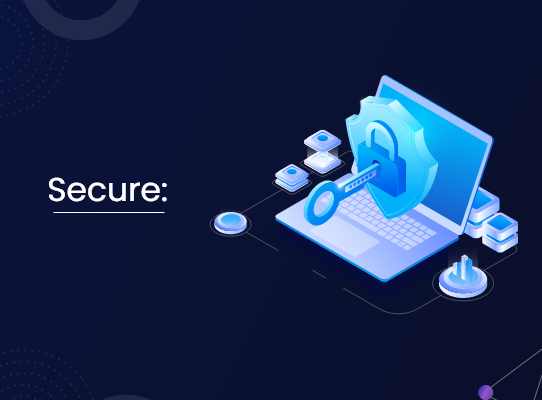
Web3 is mainly based on Blockchain, which is a new technology. Initially it was created to support Bitcoin but the world soon realized that Blockchain had many other uses as well.
Now, in order to understand Blockchain security & safety, you first need to understand Blockchain itself and how it works.
In a nutshell, Blockchain technology can be explained as a database that stores transaction data in the form of blocks. Each block is linked to the next block and can be used to verify transactions.
This record of data is distributed across many computers’ worldwide therefore, these records cannot be altered because changing data on one block means that the data on all the blocks that come after it in the chain will also need to be changed. Moreover, if the data on a certain block needs to be changed, it can only be changed through a unanimous consensus of all the validators/miners on the chain.
So, altering blocks is impossible and this helps in protection against external attacks, fraud, unwanted alterations and other forms of cybercrime.
Ownership
Web3 allows you to have ownership of digital assets. This is something that has never been seen before. You can directly own a digital asset through an NFT (non-fungible token).
For example, suppose you’re playing a game in web2 and you’ve bought certain in-game items, all the items you purchase in-game will be linked to your game account. Now, this account is purely controlled by the game creator and in the event of account deletion by game creators, you will lose your in-game items.
Furthermore, if you choose to stop playing this game then these items will have no further value for you either so yes, your money goes down the drain.
However, with web3, when you get the ownership of an in-game item through an NFT, that item isn’t just linked to your game account but in fact, it is also stored in your wallet.
In the event of account deletion or you stopping to play, the item will still be in your ownership. Not even the game creators can revert your ownership of the said item. You can choose to keep the item or trade it in open markets and even make a profit on it as well just like any other asset you own in real life.
Native Payments
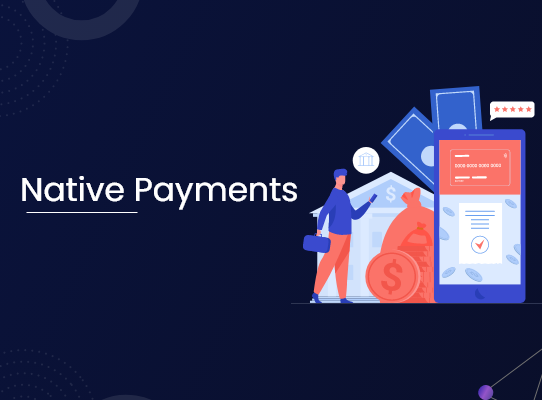
Web2 payment methods purely rely on trusted third parties such as banks or other payment gateways integrated in platforms such as PayPal, which are again linked to your bank accounts. So, one way or the other, a user is bound to go through the banking channels.
Moreover, this also poses a problem for many users, who may not be living in certain regions. For example, PayPal doesn’t operate in Afghanistan, Pakistan, Ivory Coast and many others.
With web3 such problems do not exist because web3 relies on tokens such as Eth to send money straight into a browser. No trusted third parties are required in web3 and users can easily send and receive tokens from any part of the world.
Identity
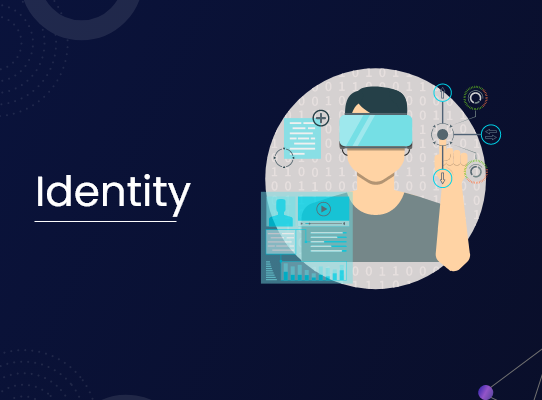
In web3, you carry your identity everywhere you go. By this, it means that you don’t have to rely on any platform’s account like you used to in web2.
See, when using web2, you would create an account on a platform of your choice such as Facebook, YouTube or Instagram. Now, if you are using all three platforms and if you want to change your display/profile picture on these platforms then you’d have to change your display/profile picture on each platform separately.
In contrast, web3 allows you to have complete control over your digital identity, which is directly linked with your crypto wallet. This wallet address offers users with a digital identity along with a single login across all web3 platforms.
What Can You Do to Get the Most Out of Web3?
Getting the most out of web3 demands your attention and thorough research. Since this space is relatively new therefore, comprehending the space will require you to put in a certain amount of time.
Now, there are a couple of ways that you can use to get yourself acquainted with web3 and realize some monetary benefits.
Here are some of the ways in which you can get the most out of web3:
- You can start by following industry leaders on twitter. This will give you a chance of hopping in on their twitter spaces, giving you a ton of knowledge.
- The web3 community is well-known for its support. However, you will need to gel in with the community first. You can achieve this by joining different DAOs and joining different channels on Discord. This will allow you to engage with others in the space and learn more.
- Attending conferences, joining various virtual summits and most of all taking online courses can help you get both basic and advanced level knowledge and help you build understanding of the overall new space.
- Keep your ears open about NFT projects and join their Discord to support them. This may even help you get a free mint and if not then you can always buy and sell NFTs as well.
To put it simply, just like everything else, when you’re entering into an unknown/new space, it is always best for you to be prepared for everything. This can only happen if you are ready to put in serious research.